|
| Charles Frederick Chadwick |
A Sketch by his Daughter, May
Charles Frederick Chadwick was born August 6, 1860, at Franklin, Cache County, Idaho. He was the son of Joseph and Sarah Goode Chadwick. He moved, with his parents, and brother, Will, to Dayton, Idaho, when he was about 8 years old.
He attended school at Oxford, about 11 miles north of Dayton. He stayed with his sister, Louise, while in school. As a boy, he was husky, and had good health. His father died when he was about 16.
At 17 years of age, he did freighting from Corrine, Utah to Helena, Montana. It was while freighting, that he bought 2 wool blankets for his mother. When he was 40 years old, his mother gave him one of the blankets. It is a relic in the family now.
Father had seen and admired my mother, Luna Nelson, when he attended school at Oxford and Franklin, because of her studiousness, and said he would make her his wife some day. When the trustees at Dayton were looking for a teacher, father suggested h knew where one lived and went to Riverdale with Calvin Boice, a brother-in-law, to see her about teaching school. Mother had not met father until then. She went to Dayton with them, boarded at the home of Sarah Pool Callen, and commenced teaching on December 28, 1880. Father, although older than she, went to her school. It was there that the romance began and June 2, 1881, they were married in the Endowment House.
 |
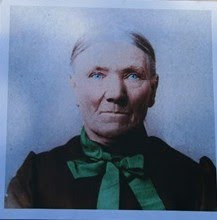
| Luna Nelson Chadwick |
They lived with father's mother, Sarah Chadwick, for about 4 months. Then Father bought a house and moved to the central part of Dayton, not far from Five Mile Creek. Their little home was made happy when their first-born, Joseph William was born, April 29, 1882.
Grandma lived about 500 yards from them. Both families used the same corral. They were busy improving the place by planting lawn, a nice variety of fruit trees, also trees for shade.
Father presided over the Mutual Improvement Association the winter of 1881. He was president until he was called on a mission to the North Western States in 1887. Their daughter, May, was born July 14, 1884.
Father was called to administer to the sick a great deal. He was always ready to go.
When he went on his mission, he left mother with three babies, Joseph, myself, and Charles, who was born July 24, 1886. We took Father to Franklin in the wagon, to catch the train for his mission. As the freight train pulled away, father stood in the door, waving good-by. I jumped up and down, screaming for him to come to me.
Mother carried the big responsibility of the home, now that Father was gone. There were crops to manage, cows to milk, horses and pigs to care for, besides we three children and a school teacher, Miss Ida Wood, who boarded with us. Mother was a wonderful person and did her jobs nobly and well.
Father was away 21 months, arriving home, December 19, 1888. He farmed the next summer. He bought some land on Birch Creek, east by Bear River and it had to be proved upon. He moved the family there until the 1st of November, 1889. Then we moved back with Father's mother until after George was born, November 22, 1889.
In the Spring, we all went back to Birch Creek. Father took a contract to haul rock for the Rail Road track that was being built through Dayton.
Our new home was under construction, the land being entered under the "Timber Act". He planted thousands of trees and made a beautiful grove. Many fine entertainments were held there when the trees grew large enough. Our new house consisted of three rooms. Two more were added later. Vera was born at the new home, September 8, 1892.
When the call was made by the church for land to be donated to help the mission cause, Father donated 20 acres of his choicest land. A part of it was used for the Dayton cemetery. The rest is still used for a mission farm (1958). Later, Father gave 5 acres where a new structure is now being built for the Saints to meet.
If there was any one thing Father liked best it was buying and selling cattle. His judgment was very good, too. At one time, he took several car loads of cattle to Canada for sale.
After crops were harvested, the next big job was to get the winter wood. It was eight or ten miles through the "narrows" into the mountains. It wasn't unusual for Father to bring the winter meat home too, as deer were very plentiful. Mother was an expert in caring for the meat. It was delicious dried.
The long winter evenings were spent reading, knitting, and romping. I shall always remember the many happy evenings we spent romping with father; we kids would all pile on him. He would laugh so hard, we could get the best of him.
Father was devoted to mother and always looked after her financial affairs.
The summers were spent raising hay and grain, and the winters feeding and caring for the cattle.
Father and mother went out among the sick a great deal. I can remember father being called out at all hours of the night to administer to the sick.
Our home was always open and a welcome given to missionaries and people travelling through the country. The family was always taught to work and save. Donations were always given freely. Father served as Bishop's counselor for a long time.
Sorrow came to the family when Joseph, the oldest, died October 17, 1901. Grandmother, father's mother, died April 23, 1904. It was after her death that Father got the rambling fever and in the spring of 1905, came out in the Snake River Valley looking for a new location.
He liked the country, new the Minidoka Project, and moved the family out in June of 1905. He bought a relinquishment of 40 acres in Heyburn, Idaho. He camped by the Snake River for two weeks, then went to Albion, where he and George put hay up for a Mr. Hayden.
George and Vera went to the State Normal school at Albion. I should have been with them but got the "marry bug", went to the Logan Temple, and was married to Charles Jones.
The folks moved back to Heyburn, February 7, 1906, on the new homestead. The sage brush cleared off the land, a log house and barn were built, and a large orchard planted.
Father was the Superintendent of the Sunday School in Heyburn until his death. He served as a home missionary one winter and was always interested in Church and Civic affairs.
Father was an average-sized man, with black hair, blue eyes, and weighed about 160 pounds. He had rather a serious disposition, but could enjoy fun with the crowd.
He died, January 25, 1910, at his daughter, May's home, in Rupert, Idaho, of typhoid fever. We took him to Dayton, Idaho for burial.
____________________________
Source: Family History Document
Ancestry.com
Father was away 21 months, arriving home, December 19, 1888. He farmed the next summer. He bought some land on Birch Creek, east by Bear River and it had to be proved upon. He moved the family there until the 1st of November, 1889. Then we moved back with Father's mother until after George was born, November 22, 1889.
In the Spring, we all went back to Birch Creek. Father took a contract to haul rock for the Rail Road track that was being built through Dayton.
Our new home was under construction, the land being entered under the "Timber Act". He planted thousands of trees and made a beautiful grove. Many fine entertainments were held there when the trees grew large enough. Our new house consisted of three rooms. Two more were added later. Vera was born at the new home, September 8, 1892.
When the call was made by the church for land to be donated to help the mission cause, Father donated 20 acres of his choicest land. A part of it was used for the Dayton cemetery. The rest is still used for a mission farm (1958). Later, Father gave 5 acres where a new structure is now being built for the Saints to meet.
If there was any one thing Father liked best it was buying and selling cattle. His judgment was very good, too. At one time, he took several car loads of cattle to Canada for sale.
After crops were harvested, the next big job was to get the winter wood. It was eight or ten miles through the "narrows" into the mountains. It wasn't unusual for Father to bring the winter meat home too, as deer were very plentiful. Mother was an expert in caring for the meat. It was delicious dried.
The long winter evenings were spent reading, knitting, and romping. I shall always remember the many happy evenings we spent romping with father; we kids would all pile on him. He would laugh so hard, we could get the best of him.
Father was devoted to mother and always looked after her financial affairs.
The summers were spent raising hay and grain, and the winters feeding and caring for the cattle.
Father and mother went out among the sick a great deal. I can remember father being called out at all hours of the night to administer to the sick.
Our home was always open and a welcome given to missionaries and people travelling through the country. The family was always taught to work and save. Donations were always given freely. Father served as Bishop's counselor for a long time.
Sorrow came to the family when Joseph, the oldest, died October 17, 1901. Grandmother, father's mother, died April 23, 1904. It was after her death that Father got the rambling fever and in the spring of 1905, came out in the Snake River Valley looking for a new location.
He liked the country, new the Minidoka Project, and moved the family out in June of 1905. He bought a relinquishment of 40 acres in Heyburn, Idaho. He camped by the Snake River for two weeks, then went to Albion, where he and George put hay up for a Mr. Hayden.
George and Vera went to the State Normal school at Albion. I should have been with them but got the "marry bug", went to the Logan Temple, and was married to Charles Jones.
The folks moved back to Heyburn, February 7, 1906, on the new homestead. The sage brush cleared off the land, a log house and barn were built, and a large orchard planted.
Father was the Superintendent of the Sunday School in Heyburn until his death. He served as a home missionary one winter and was always interested in Church and Civic affairs.
Father was an average-sized man, with black hair, blue eyes, and weighed about 160 pounds. He had rather a serious disposition, but could enjoy fun with the crowd.
He died, January 25, 1910, at his daughter, May's home, in Rupert, Idaho, of typhoid fever. We took him to Dayton, Idaho for burial.
 |
| C. Frederick Chadwick Memorial 1860-1910 Dayton, Franklin, Idaho |
____________________________
Source: Family History Document
Ancestry.com